
Dr. Alessandro Giardini
.png)
.png)
.png)

Being told that your child has a heart murmur can be unsettling. You may have heard it for the first time at a newborn check, a six-week review, a GP visit or a school medical, and now you want to know what it means. The important thing to understand is that a heart murmur is a sound, not a diagnosis. While most murmurs in children turn out to be completely harmless, a murmur can occasionally be the first sign of an underlying heart condition. The only reliable way to tell the difference is through a proper specialist assessment, and this is something that can be resolved quickly and clearly in a single appointment with Dr Giardini.
Studies suggest that between 50% and 70% of all children will have an audible heart murmur at some point during childhood. Of these, 1% turn out to be caused by a structural heart problem. Those are reassuring numbers, but they also mean that for every hundred children with a murmur, there may be one or two who do have an underlying condition that needs to be identified. The difficulty is that the murmur itself does not tell you which group your child falls into. That is why assessment matters.
A heart murmur is a whooshing or swishing sound that a doctor hears between the normal heartbeat sounds when listening with a stethoscope. It is caused by the movement of blood through the heart and nearby blood vessels.
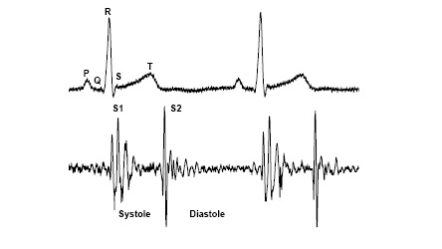
In children, several factors make murmurs particularly easy to hear. A child's heart beats faster than an adult's, the chest wall is thinner, and the blood vessels are closer to the surface. This means that perfectly normal blood flow can create a soft sound that is audible through the stethoscope, even when the heart is completely healthy. This is why murmurs are so common in babies, toddlers and school-age children. However, the same stethoscope sound can also be produced by abnormal blood flow through a structural defect, which is precisely why a murmur heard for the first time should not simply be assumed to be harmless without proper evaluation.
Heart murmurs fall into two broad categories: innocent murmurs and pathological murmurs.
Innocent murmurs (also called functional or benign murmurs) are by far the most common type. They are caused by normal blood flowing through a normal heart and do not indicate any disease or structural abnormality. The most common is the Still's murmur, named after the English paediatrician George Frederic Still. It produces a distinctive, soft, musical or vibratory sound and is most frequently heard in school-age children, although it can occur at any age. A pulmonary flow murmur is caused by normal blood flowing across the pulmonary valve and is heard at the upper left part of the chest. A venous hum is produced by blood returning to the heart through the large veins in the neck and typically disappears when the child lies down. All of these are completely harmless.
Innocent murmurs tend to become louder during fever, excitement, exercise or illness, and may become more noticeable during growth spurts. Many become quieter or disappear as a child grows into adolescence, although some persist into adulthood without ever causing concern.
Pathological murmurs are less common and are caused by a structural abnormality of the heart or blood vessels. These include holes in the heart (such as a ventricular septal defect or atrial septal defect), a persistent ductus arteriosus (PDA), narrowed heart valves (stenosis), leaking heart valves (regurgitation) and obstruction to blood flow. These conditions vary widely in significance. Some are mild and need only monitoring, while others may benefit from treatment. Importantly, the vast majority of structural heart conditions identified through a murmur are now very well treated with excellent outcomes, provided they are picked up early.
GPs and paediatricians are skilled at identifying heart murmurs, and many are confident at recognising the characteristics of an innocent murmur with a stethoscope. However, it is well recognised in the medical literature that clinical auscultation alone has limitations. Some innocent murmurs can sound similar to pathological ones, and some structural heart conditions produce only subtle murmurs that are difficult to classify on listening alone. An echocardiogram is the gold standard investigation because it provides a definitive, visual answer: either the heart is structurally normal or it is not. No amount of careful listening can replicate the certainty that an ultrasound scan provides.
This is why many parents choose to see a paediatric cardiologist even when their GP believes the murmur is likely to be innocent. The value of a specialist appointment is not just clinical, it is the peace of mind that comes from knowing for certain.
Murmurs can be heard at any age, but there are certain moments when they are particularly likely to be noticed.
In the first 24 to 48 hours of life, murmurs are relatively common as the newborn circulation adjusts to life outside the womb. Some of these early murmurs are caused by the normal closure of fetal blood vessels and disappear within days. Others, particularly those that are louder or persist, may indicate a congenital heart defect and warrant further assessment.
The six-week baby check is another very common point of discovery for UK families. A murmur heard at this stage is often innocent, but because some heart conditions only become apparent after the newborn period, referral for a specialist opinion is a sensible and recommended step.
In toddlers and school-age children, innocent murmurs are extremely common and may be picked up during a routine GP visit or when a child is examined for another reason such as a chest infection or fever. It is not unusual for a murmur to be heard for the first time at this age even though it has been present all along.
In teenagers and young athletes, a murmur may be detected during a pre-participation sports screening or a school medical. Dr Giardini has particular expertise in sport cardiology and frequently assesses young people referred with murmurs in this context. Whether your child's murmur was heard at any of these stages, Dr Giardini can provide a definitive answer during a single appointment, with the echocardiogram performed and interpreted on the same day.
Most children with an innocent murmur have no symptoms at all, which is itself an important reassurance. However, the absence of symptoms does not guarantee that the heart is normal, because some structural conditions can be present without causing obvious signs, particularly in the early stages.
When symptoms are present alongside a murmur, they may include breathlessness during activity, getting tired more easily than other children, poor feeding or slow weight gain in babies, frequent chest infections, or, less commonly, chest pain, palpitations or fainting. These features do not necessarily mean there is a serious heart condition, but they do increase the importance of specialist assessment.
Parents should seek prompt medical attention if a baby is feeding poorly, gaining weight slowly, breathing fast or sweating during feeds. In older children, blue discolouration of the lips or skin, unexplained fainting, or significant breathlessness with activity should be assessed without delay.
🟢 Usually not concerning
🟡 Worth medical review
🔴 Seek prompt assessment
The assessment begins with a careful clinical history and physical examination. Dr Giardini will listen to the murmur's character, loudness, timing and location, and examine your child for any other signs of heart disease.
An echocardiogram is then performed during the same appointment. This is a painless, radiation-free ultrasound scan that produces detailed moving images of the heart's structure and blood flow in real time. It takes between 15 and 30 minutes and is the single most reliable test for confirming whether the heart is normal or whether a structural abnormality is present. Dr Giardini performs and interprets all echocardiograms personally, which means there is no waiting for results, no separate scan appointment, and no period of uncertainty. You will leave the consultation with a clear answer.
An electrocardiogram (ECG) may also be performed to check the heart's electrical activity. Further tests, such as a cardiac MRI or exercise test, are only needed in a small minority of cases.
For the majority of families, the outcome is the answer they were hoping for: the heart is completely normal and the murmur is innocent. This is the single most common result of a specialist assessment for a heart murmur, and for many parents it is the most valuable part of the appointment. Knowing for certain that your child's heart is healthy allows you to move forward with confidence. Children with innocent murmurs have no restrictions on physical activity, sport or everyday life, and no further cardiac follow-up is needed.
If a structural heart condition is identified, Dr Giardini will explain the diagnosis clearly, outline what it means for your child, and discuss the next steps. Some conditions require only periodic monitoring. Others may benefit from medication, catheter-based intervention or surgery. The important reassurance is that the large majority of conditions picked up through a murmur in childhood are very well treated, with excellent long-term outcomes. Early identification through proper assessment gives the best foundation for appropriate care, and many families find that what initially felt frightening turns out to be entirely manageable.
Parents seek a specialist opinion for a heart murmur for many reasons. Some have been advised to do so by their GP or paediatrician. Others have been told the murmur is "probably innocent" but want the certainty that only an echocardiogram can provide. Some are preparing their child for competitive sport and want to be sure the heart is healthy. Whatever the reason, the value of a specialist appointment lies in the definitive answer it provides.
Dr Giardini sees children of all ages with heart murmurs at his London clinics. The assessment, echocardiogram and results are all completed in a single visit, so families do not face an extended wait for answers. If you would like to arrange an appointment, please do not hesitate to contact Dr Giardini's team.
In most children, no. The large majority of heart murmurs are innocent, meaning the heart is completely normal. However, a specialist assessment is the only way to confirm this with certainty, and it can usually be completed in a single appointment.
Not every murmur requires specialist referral, particularly when an experienced doctor is confident it is innocent. However, if there is any uncertainty, if symptoms are present, or if you simply want peace of mind, a specialist review is the most reliable way to get a clear answer.
A Still's murmur is the most common type of innocent heart murmur in children. It produces a soft, musical sound and is most often heard in school-age children. It is completely harmless and requires no treatment.
Yes. Many innocent murmurs become quieter or disappear as a child grows, although some persist into adulthood. Even if an innocent murmur remains audible, it is of no consequence.
An echocardiogram is the gold standard test for confirming whether a heart murmur is innocent or structural. It provides a definitive visual answer in a painless scan lasting 15 to 30 minutes. Dr Giardini performs and interprets the scan during the same appointment, so results are available immediately.
Yes, if the murmur is innocent. Children with confirmed innocent murmurs have no restrictions whatsoever on sport or physical activity. If a heart condition is identified, Dr Giardini will advise on appropriate activity levels based on the specific diagnosis.
GPs refer children with murmurs to be thorough and to confirm that the murmur is harmless. A referral does not mean there is a problem. It means the GP would like a specialist to provide a definitive opinion, which is good practice.
A murmur is a sound heard with the stethoscope. A heart defect is a structural abnormality of the heart. Most murmurs in children are not caused by defects. An echocardiogram is the test that distinguishes between the two.
A murmur heard at the six-week check is often innocent, but some heart conditions only become apparent after the newborn period. A specialist assessment with echocardiogram can confirm the heart is normal and provide reassurance quickly.
Innocent murmurs are not hereditary. Some structural heart conditions that cause murmurs can run in families. If there is a family history of congenital heart disease, Dr Giardini can discuss whether screening of other family members would be appropriate.
Author: Dr. Alessandro Giardini, MD, PhD
Written 17/04/2026